

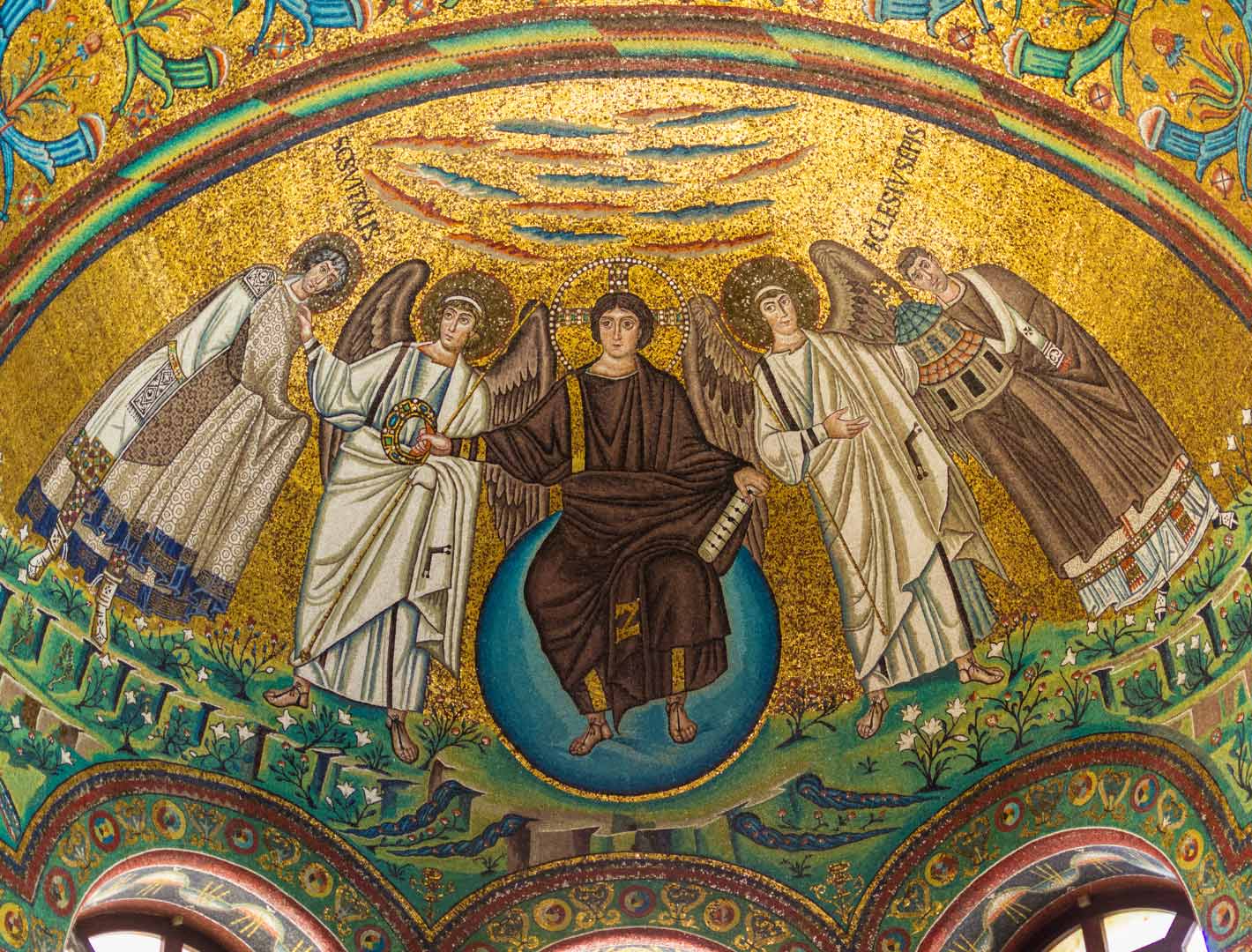
The Basilica of San Vitale is one of the most representative monuments of Ravenna and one of the masterpieces of Byzantine art. The church, built in the 6th century, is famous for its magnificent mosaics that adorn the interior, particularly the cycle depicting the Emperor Justinian and his court, a symbol of the power of the Byzantine Empire. The architecture of the basilica is equally spectacular, featuring an octagonal plan and a dome decorated with mosaics.”
Between history and mosaics
Ravenna
Ravenna is a historic city located in the Emilia-Romagna region, famous for its extraordinary artistic and cultural heritage, which makes it one of the most fascinating destinations in Italy. The city is primarily known for its Byzantine mosaics, a UNESCO World Heritage site, but also for its ancient history and its role as a capital during various historical periods, including the Ostrogothic Kingdom and the Byzantine Empire.
Ravenna is also an important economic center, thanks to its commercial port and strategic position. The city preserves artisanal traditions such as mosaic production, which are still crafted using traditional techniques. Ravenna’s gastronomy, based on fish dishes, seafood, and local typical products, is another aspect that makes the city even more interesting.
Basilica di San Vitale

Mausoleo di Galla Placida
This mausoleum, built in the 5th century, is one of the most beautiful examples of late antique and Byzantine art. Although relatively small, the interior of the mausoleum is extraordinarily rich in mosaics, including one of the most famous: the starry sky decorating the vault. It is believed that Galla Placidia, a prominent figure in the Western Roman Empire, was buried in this monument, although her tomb has never been identified with certainty.
Basilica di Sant'Apollinare in Classe
Located outside the historic center of Ravenna, the Basilica of Sant’Apollinare in Classe is another magnificent example of Byzantine art. The church is famous for its mosaics decorating the apse, depicting Saint Apollinaris among shepherds and sheep, a work that represents the fusion of Christian symbolism and Byzantine tradition. The basilica is an important example of 6th-century religious architecture and offers a peaceful and evocative atmosphere.

The Tomb of Dante Alighieri
Ravenna is also famous for being the city where the tomb of Dante Alighieri, the celebrated poet of the Divine Comedy, is located. The tomb is a simple yet imposing monument, built in 1781, and is situated inside a public garden. It is one of the most visited places in the city, as Dante spent the final years of his life in Ravenna, where he died in 1321.

Organize your excursion
Boat excursions
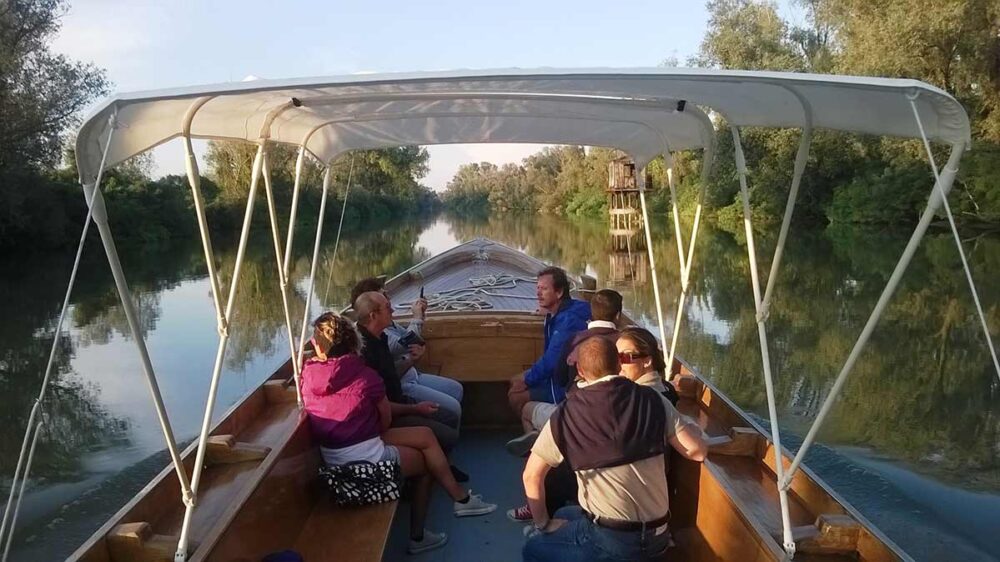
Water is the dominant element of the Po Delta Park and the Comacchio Valleys…

Bike Excursions
Bike Excursions Set off to discover our territory with a unique and exciting…

Walking excursions
The best way to truly connect with the natural and historical treasures of t…

Horseback riding excursions
For horse riding enthusiasts, we offer beautiful horseback excursions immers…
Let’s discover our surroundings
Map of the territory
- Hotel & residence
- Point of interest